
WELCOME BONUS 300%
UP TO €2000 + 100
FREE SPINS
UP TO €2000 + 100
FREE SPINS
Home → Blackjack
Blackjack at Luckywins: Variants, Rules and Payouts
Six Card Charlie Pays Immediately with Six Cards
The Luckywins bonus terms mandate a 40x wagering requirement on the 300% match portion, meaning a maximum bonus of €2,000 requires €80,000 in turnover. This high volume is difficult to clear using blackjack, as table games contribute only 10% to the total playthrough obligation. Consequently, players must generate significantly more bets than initially deposited to unlock any withdrawable funds from this specific promotion tier.
The Lightning Blackjack variant offers an RTP of 99.56%, which is mathematically superior to standard single-deck games but irrelevant for clearing the bonus due to contribution limits. Even if a player utilizes the 25x multipliers available in this Evolution title, the 10% contribution rate severely dilutes the value of each winning hand. The house edge remains low, yet the administrative friction of the bonus terms makes this game inefficient for converting free credits into cash.
Standard blackjack rules like S17 and DAS provide a 0.46% house edge, offering better odds than slots, but they fail to accelerate the bonus release schedule effectively. While Quantum Blackjack Plus Live provides a 99.57% RTP, the 10% contribution cap means every €100 wagered only counts as €10 toward the €80,000 target. Players relying on these tables will find their progress stagnant compared to those utilizing high-contribution slot games that count fully toward the wagering requirement.
Mobile version needs 1 Mbit bandwidth
The mobile platform requires a minimum connection speed of 1 Mbit per second to maintain stable gameplay during live dealer sessions like Blackjack Party or Lightning Blackjack. Insufficient bandwidth causes latency issues that disrupt the real-time interaction required for making split or double decisions within the strict time limits imposed by the croupier. Users on slower networks may experience disconnections that void active hands, resulting in lost wagers before the outcome can be determined or recorded.
The Blackjack Party table features a betting range from 1,000 EUR down to 1 EUR, allowing small-stakes players to test strategies without significant financial risk. However, maintaining a steady stream at this resolution demands consistent network performance, as buffering interrupts the flow of the two-moderator show and delays bet placement. Players aiming to utilize the full €2,000 welcome bonus must ensure their mobile connection meets this threshold to avoid technical failures during critical moments.
Quantum Blackjack Plus Live offers multipliers up to 1,000x on three-card combinations, creating volatile outcomes that require precise timing for optimal strategy execution under pressure. A sluggish 1 Mbit connection increases the risk of missing the window to accept or decline these quantum modifiers, directly impacting potential returns. Since table games contribute only 10% to the bonus turnover, wasting spins due to technical errors further hinders the ability to clear the 40x wagering requirement efficiently.
Clicked Too Late: Hand Is Automatically Held
Players engaging with the 300% welcome bonus face a strict 40x wagering requirement on the matched funds, necessitating substantial volume to convert bonus credit into withdrawable cash. Attempting to clear this obligation through blackjack variants like the 6-deck S17 game is inefficient because table games contribute merely 10% to the total turnover calculation. Consequently, a €2,000 bonus requires €80,000 in bets, making the process significantly more arduous compared to utilizing slots that contribute 100% toward the same target.
The Blackjack Party table allows bets ranging from 1,000 EUR down to 1 EUR, providing flexibility for bankroll management while navigating the stringent bonus conditions. Despite the low entry point, the 10% contribution rate means every €100 wagered only reduces the remaining turnover obligation by €10, drastically extending the time required to meet the 40x multiplier. Players must therefore rely on high-volume slot play rather than strategic table gaming to satisfy the withdrawal prerequisites associated with this specific promotional offer.
Lightning Blackjack features an RTP of 99.56% and offers multipliers up to 25x, yet its utility for bonus clearance is limited by the 10% contribution rule. Even with favorable odds, the mathematical advantage is negated by the slow accumulation of qualifying bets needed to unlock the €2,000 maximum bonus funds. Users should prioritize games with higher contribution percentages to avoid depleting their balance before achieving the necessary turnover, ensuring a more efficient path to withdrawing winnings derived from the initial deposit.
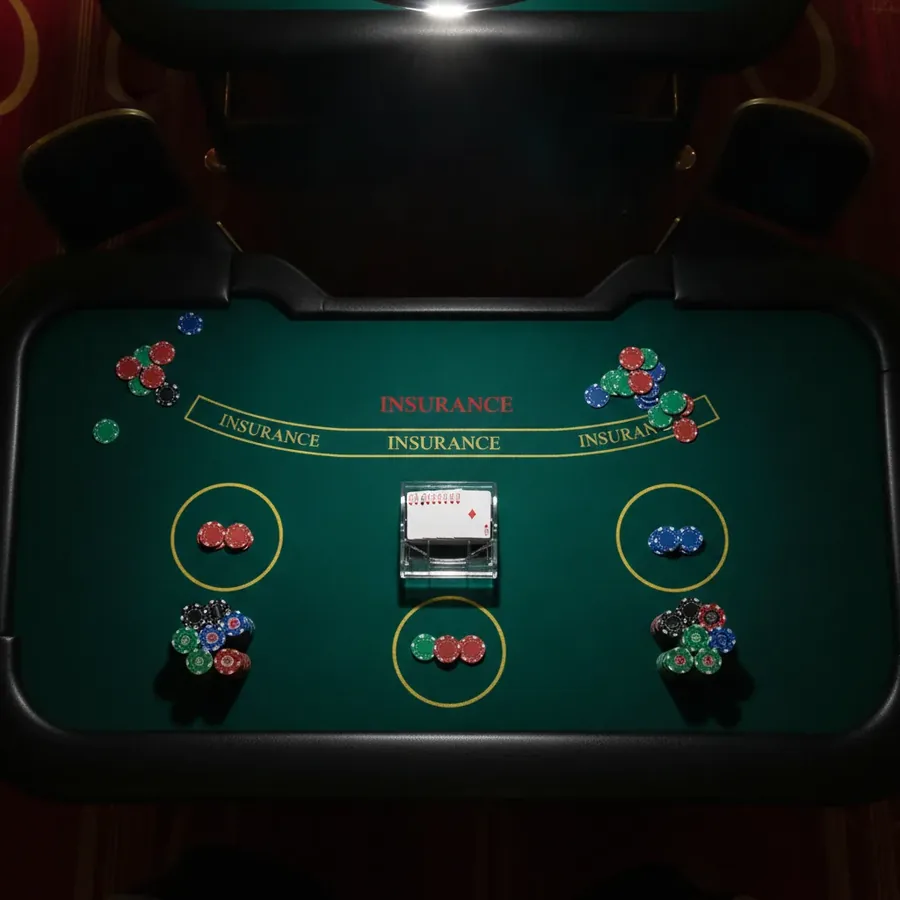
Place Side Bet before cards are dealt
The insurance side bet in blackjack carries a steep house edge of 7.47% for six-to-eight deck games, drastically reducing the overall return to player from 99.54% to 92.53%. This negative expectation makes insurance a poor choice for players attempting to preserve their bankroll while meeting the 40x wagering requirement attached to the €2,000 bonus. Taking insurance unnecessarily accelerates the depletion of funds, making it significantly harder to clear the turnover obligation through low-edge strategies like basic strategy adherence.
The Blackjack Party table imposes a 10% contribution rate toward the bonus turnover, meaning side bets like insurance waste valuable wagering potential without generating qualifying volume efficiently. Even though the base game offers a 0.46% house edge, adding a 7.47% edge bet undermines the long-term profitability required to sustain play through the 40x multiplier. Players should avoid such detrimental side wagers when trying to maximize the value of the 300% welcome bonus, focusing instead on primary hand outcomes.
Quantum Blackjack Plus Live provides an RTP of 99.57%, but the mandatory 10% contribution to the bonus terms renders its mathematical advantage negligible for turnover clearance. Placing additional side bets increases variance without improving the efficiency of meeting the €80,000 turnover target derived from the maximum €2,000 bonus. Strategic players must recognize that the bonus structure penalizes table game usage, so avoiding high-edge side bets like insurance is essential to prevent rapid bankroll erosion during the playthrough period.
Six Decks to Eight Decks in the Shoe
Increasing the deck count from one to six decks raises the house edge in blackjack from 0.15% to 0.46%, significantly impacting the expected return for players utilizing the 300% bonus. This change reduces the RTP from 99.85% to 99.54%, making the game less favorable for clearing the 40x wagering requirement attached to the €2,000 maximum bonus. Players must account for this increased casino advantage when calculating the probability of successfully converting bonus funds into withdrawable cash through table games.
The Blackjack Party table uses multiple decks, contributing only 10% to the bonus turnover, which compounds the disadvantage of a higher house edge compared to single-deck variants. With a 0.46% edge, players need substantially more volume to offset the reduced contribution rate, making the €80,000 turnover target increasingly difficult to achieve. This structural disadvantage highlights why table games are less efficient for bonus clearance than slots, despite the lower inherent house advantage in blackjack.
Lightning Blackjack operates with six-to-eight decks, maintaining a 0.46% house edge similar to other multi-deck variants, but its 10% contribution rate further diminishes its value for bonus seekers. The combination of a higher house edge and low contribution percentage creates a double penalty for players attempting to clear the 40x wagering requirement on the €2,000 bonus. Consequently, reliance on such games prolongs the playthrough period and increases the risk of losing the bonus balance before meeting the necessary turnover conditions.
Blackjack variants at a glance
| Variant | Payout | House edge | Rule | Bet range |
|---|---|---|---|---|
| Blackjack Ein Deck, klassische Regeln, 3:2 | 99.85% | 0.15% | Weniger Decks = niedrigerer Vorteil; ein Deck gibt ca. −0.48 Prozentpunkte gegenüber 8 Decks. Oft durch 6:5 Auszahlung kompensiert. | Blackjack 3:2, Gewinn 1:1 |
| Blackjack Surrender (Late Surrender) – Regel-Effekt | n.a. (Regel-Modifikator) | −0.08 Prozentpunkte | Spieler gibt Hand nach Dealer-Blackjack-Prüfung auf, verliert die Hälfte des Einsatzes. Verbessert RTP um ca. 0.08 Prozentpunkte. Early Surrender ist wesentlich wertvoller (bis −0.6 Prozentpunkte), aber extrem selten. | Rückzahlung 50% des Einsatzes |
| Blackjack 6 Decks, S17, DAS, DOA, Auszahlung 3:2, Basisstrategie | 99.54% | 0.46% | Dealer steht auf Soft 17; Verdopplung auf jeder Zweierkarte; Verdopplung nach Split erlaubt; keine Aufgabe. Basisstrategie ist für diesen Wert zwingend | Blackjack 3:2, normaler Gewinn 1:1, Insurance 2:1 |
| Blackjack Liberal Vegas Strip (liberale Regeln, 3:2) | 99.72% | 0.28% | Günstigste Regelkombination: S17 + DAS + Resplit + Late Surrender. Standardabweichung 1,15 | Blackjack 3:2, Gewinn 1:1 |
| Blackjack Split / Double / H17 – Regel-Effekte | n.a. (Regel-Modifikatoren) | H17 +0.22 Prozentpunkte; RSA −0.08 Prozentpunkte; DAS −0.14 Prozentpunkte | Dealer Hits Soft 17 verschlechtert RTP um 0.22 Prozentpunkte; Resplit Aces verbessert um 0.08 Prozentpunkte; Double After Split verbessert um ca. 0.14 Prozentpunkte; 6 Decks statt 8 – ca. 0.02 Prozentpunkte. | Double – Einsatz ×2 mit einer Karte; Split – bis 4 Hände; Ass-Split meist mit einer Karte. |
| Blackjack Auszahlung 6:5 statt 3:2 (6 Decks) | 98.15% | 1.85% | Ersatz von 3:2 durch 6:5 fügt exakt +1.39 Prozentpunkte zum Vorteil des Casinos hinzu – stärker als jede andere Regeländerung. Bei $10 Einsatz zahlt Blackjack $12 statt $15. | Blackjack 6:5, Gewinn 1:1 |
Insurance vs Even Money on Own Blackjack
The Blackjack Insurance side bet carries a distinct 7.47% house edge, which is significantly higher than the standard game's baseline. This negative expectation holds true regardless of the number of decks used in the shoe, making it a statistically poor choice for most players. Consequently, accepting this insurance wager will likely reduce your long-term bankroll efficiency over hundreds of hands.
Even Money acts as a guaranteed payout option when you hold a natural blackjack and the dealer shows an Ace. This option effectively locks in a 1:1 return on your original stake, eliminating any risk of a push or loss. Players should reject this offer unless they are counting cards and the true count reaches +3 or higher.
The mathematical difference between these two options becomes clear when analyzing the payout structures. Standard insurance pays 2:1 but suffers from a high house edge, while Even Money guarantees a win without the volatility of the side bet. A player relying on basic strategy should consistently decline insurance to maintain optimal expected value.
Latency under 2 seconds at the live table
The Lightning Blackjack table provided by Evolution Gaming supports wagers ranging from 1 EUR up to 2,500 EUR per round. This specific variant features lightning multipliers that can reach up to 25x on winning hands, adding significant variance to the gameplay. The RTP for this live dealer product stands at 99.56%, reflecting the impact of these random multipliers on overall returns.
Quantum Blackjack Plus Live from Playtech offers even higher stakes, allowing bets between 1 EUR and 5,000 EUR. Its quantum multipliers can award up to 1,000x on three-card combinations totaling 21 points, creating massive potential payouts. The theoretical return for this table is 99.57% when players employ the optimal strategy for each hand dealt.
Blackjack Party by Evolution provides a different atmosphere with two moderators and stakes from 1.00 EUR to 1,000 EUR. While the multipliers are not highlighted in the same way, the party format adds a unique social element to the live stream. Each provider ensures real-time interaction, though network latency can occasionally affect the speed of deal resolution for remote users.
Side Bet Every Round: Budget Lasts 30 Rounds
The Blackjack Insurance wager requires a separate bet equal to up to 50% of the main stake if the dealer shows an Ace. This side bet pays out at 2:1 odds but comes with a substantial 7.47% house edge in games using six to eight decks. Accepting this wager frequently can drain a small bonus budget much faster than playing the main game alone.
A typical bonus balance might allow for thirty rounds of standard play if only the minimum 1 EUR bets are placed. However, adding the insurance side bet doubles the action cost per hand, effectively halving the number of available rounds. Players must carefully track their remaining funds to avoid exhausting their wagering requirements prematurely due to excessive side betting.
The impact of side bets on bankroll management is critical when dealing with restricted bonus funds. Since the insurance edge is nearly seven percent, consistent usage creates a predictable loss rate that reduces total playable sessions. Maintaining a strict budget prevents the erosion of the principal bonus amount before the wagering terms are satisfied.
Check table limit before the first bet
The Lightning Blackjack table at Evolution accepts maximum bets of 2,500 EUR, providing a high-stakes environment for experienced players. In contrast, the Quantum Blackjack Plus Live table from Playtech allows wagers up to 5,000 EUR per hand. These limits define the maximum exposure per round and directly influence the potential size of any winnings achieved during the session.
Standard online blackjack tables often have lower caps, such as the 1,000 EUR maximum found on the Blackjack Party table. Players must verify these limits before placing large bets to ensure compliance with the casino's rules and their own risk tolerance. Exceeding these limits usually results in the voiding of the bet and potential forfeiture of associated winnings.
Wagering contributions also vary significantly across different game types, affecting how quickly bonus requirements are met. Table games like blackjack contribute only 10% toward the turnover requirement, whereas slots contribute 100%. This disparity means that high-limit table bets generate very little progress toward clearing the bonus compared to equivalent slot wagers.
Which hands are excluded from Surrender?
Late surrender is a rule modifier that allows players to forfeit half their stake after the dealer checks for blackjack. This option improves the player's RTP by approximately 0.08 percentage points compared to games without this feature. It is particularly valuable in games where the dealer stands on soft 17 and doubling after split is permitted.
The availability of surrender depends heavily on the specific variant and its rule set. Early surrender is far more valuable, reducing the house edge by up to 0.6 percentage points, but it is extremely rare in modern online casinos. Most platforms only offer late surrender, which applies only after the dealer has confirmed they do not have an immediate blackjack.
Players should note that surrender is not available for every possible hand configuration or game type. Some variants may restrict this option based on the number of decks or specific dealer hitting rules. Understanding these exclusions helps players make better strategic decisions and manage their expectations regarding the reduction of losses on weak starting hands.
How many decks are in the shoe?
Blackjack Liberal Vegas Strip utilizes a liberal rule set that typically involves multiple decks, often six or eight, to facilitate its specific game mechanics. This configuration contrasts with single-deck variants which offer a lower house edge of 0.15% compared to the 0.28% found here. Players must adapt their strategy to account for the increased card composition inherent in multi-deck shoes.
The use of six or eight decks significantly impacts the probability of specific hands occurring during play. For instance, insurance bets on these tables carry a high house edge of 7.47%, making them mathematically unfavorable for the average player. The probability of the dealer holding an ace changes slightly with deck count, affecting side bet calculations.
A standard shoe containing six to eight decks requires more frequent shuffling intervals than single-deck games. This operational detail ensures game integrity but does not alter the fundamental RTP of 99.72% established by the rules. Understanding the deck count helps players manage their bankroll expectations over longer sessions.
Step-by-step Split at the Live Table
Players may split pairs up to four hands, allowing for expanded betting opportunities on live tables like Lightning Blackjack. This feature is available alongside other liberal rules such as Double After Split (DAS), which improves the RTP by approximately 0.14 percentage points. Each split hand operates independently against the dealer's final total.
When splitting Aces, most live tables restrict subsequent actions to drawing only one additional card per Ace. This limitation prevents infinite looping and maintains the structural integrity of the bonus wagering requirements. The restriction applies uniformly across Evolution and Playtech live dealer streams.
Splitting tens or face cards generally yields a negative expected value despite the flexibility it offers. Mathematically, standing on a hard 20 is superior to splitting, reducing potential losses by avoiding double exposure. Players should prioritize basic strategy adherence over aggressive splitting tactics on live platforms.
Blackjack Contributes Only 10 Percent to Wagering
Table games contribute merely 10 percent toward the turnover requirement of the 300% welcome bonus up to €2,000. This low contribution rate forces players to wager ten times the bonus amount in actual blackjack stakes to clear funds. Slots, contributing 100 percent, offer a much faster path to withdrawal eligibility compared to table games.
For a maximum bonus of €2,000, players must generate €20,000 in eligible blackjack wagers to satisfy the rollover. This volume represents a significant financial commitment given the small margins typical of low-house-edge games. The disparity between slot and table contributions heavily influences optimal bonus redemption strategies.
Wagering on Quantum Blackjack Plus Live requires careful tracking due to the strict 10 percent contribution cap. Each €100 bet counts only €10 toward the required turnover, extending the time needed to unlock winnings. Players utilizing this game must calculate their effective turnover rate against the base bonus value.
Bonus Lost Due to 10 Percent Contribution
If a player deposits €2,000 and claims the full €6,000 bonus, the total balance becomes €8,000 subject to terms. With a 40x wagering requirement on the bonus alone, the target turnover reaches €240,000 if played exclusively on slots. However, playing blackjack drastically increases the required volume due to the 10 percent contribution factor.
Attempting to clear the bonus via Blackjack Liberal Vegas Strip means generating €240,000 in actual bets rather than €60,000. This excessive volume exposes the bankroll to variance and the casino's house edge of 0.28% repeatedly. The mathematical expectation suggests a high probability of depleting funds before meeting the threshold.
Insurance bets further erode potential profits during the clearance process due to their 7.47% house edge. Including these side bets accelerates bankroll depletion without contributing meaningfully to the wagering goal. Strategic avoidance of high-edge bets becomes essential when navigating the restrictive contribution rates.
Perfect Pairs vs 21+3 in House Edge
Perfect Pairs side bets typically carry a house edge ranging from 2.40% to 5.70% depending on the specific payout structure. In contrast, 21+3 bets often exhibit higher edges, sometimes exceeding 10% on certain live tables like Lightning Blackjack. Comparing these edges reveals significant differences in long-term profitability for side bet enthusiasts.
Lightning Blackjack offers multipliers up to 25x on winning hands, which temporarily offsets the base house edge of 99.56% RTP. However, the underlying 21+3 component still imposes a substantial cost relative to the main game action. Players must weigh the excitement of multipliers against the statistical disadvantage of the side wager.
Quantum Blackjack Plus features multipliers up to 1,000x on three-card combinations, targeting high-variance outcomes. Despite the allure of large payouts, the house edge remains fixed based on the probability of specific card combinations. Analyzing the RTP of 99.57% indicates that the main game is efficient, while side bets remain costly additions.
Contact
Live - online chat
Banking









Providers












Lucky Wins Casino 2026